Overview of ADAP and MCA
Mental Capacity Act (Chapter 177A)
“For the purposes of this Act, a person lacks capacity in relation to a matter if at the material time he is unable to make decision for himself in relation to the matter because of an impairment of, or a disturbance in the functioning of, the mind or brain.”
That is, mental capacity is the ability of the person to make a specific decision at a particular time.
Mental capacity is assessed on a case-by-case basis. It cannot be assumed based only on the person’s medical history or psychological condition. Furthermore, a person’s lack of mental capacity cannot be based only on age, how the person looks, their physical condition or any aspect of behaviour.
A person may have the capacity to make some decisions for specific tasks and not others. For example, a person may be able to decide which market to visit and what groceries to buy, but not able to handle large sums of money to make investment decisions. A person may also show capacity for a task at a particular time. Mental capacity may improve or be reduced (degrade) over time.
Why is the Mental Capacity Act important, and what does it cover?
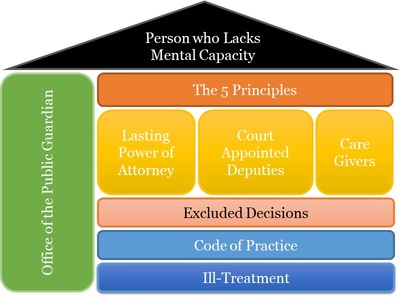
The Mental Capacity Act enables people to plan ahead and gives them the power to make choices for their future. It addresses the need to make decisions for persons who are 21 years or older but they lack mental capacity to make those decisions for themselves. Pages 1 to 4 of the OPG Code of Practice highlights the functions and purpose of the Mental Capacity Act.
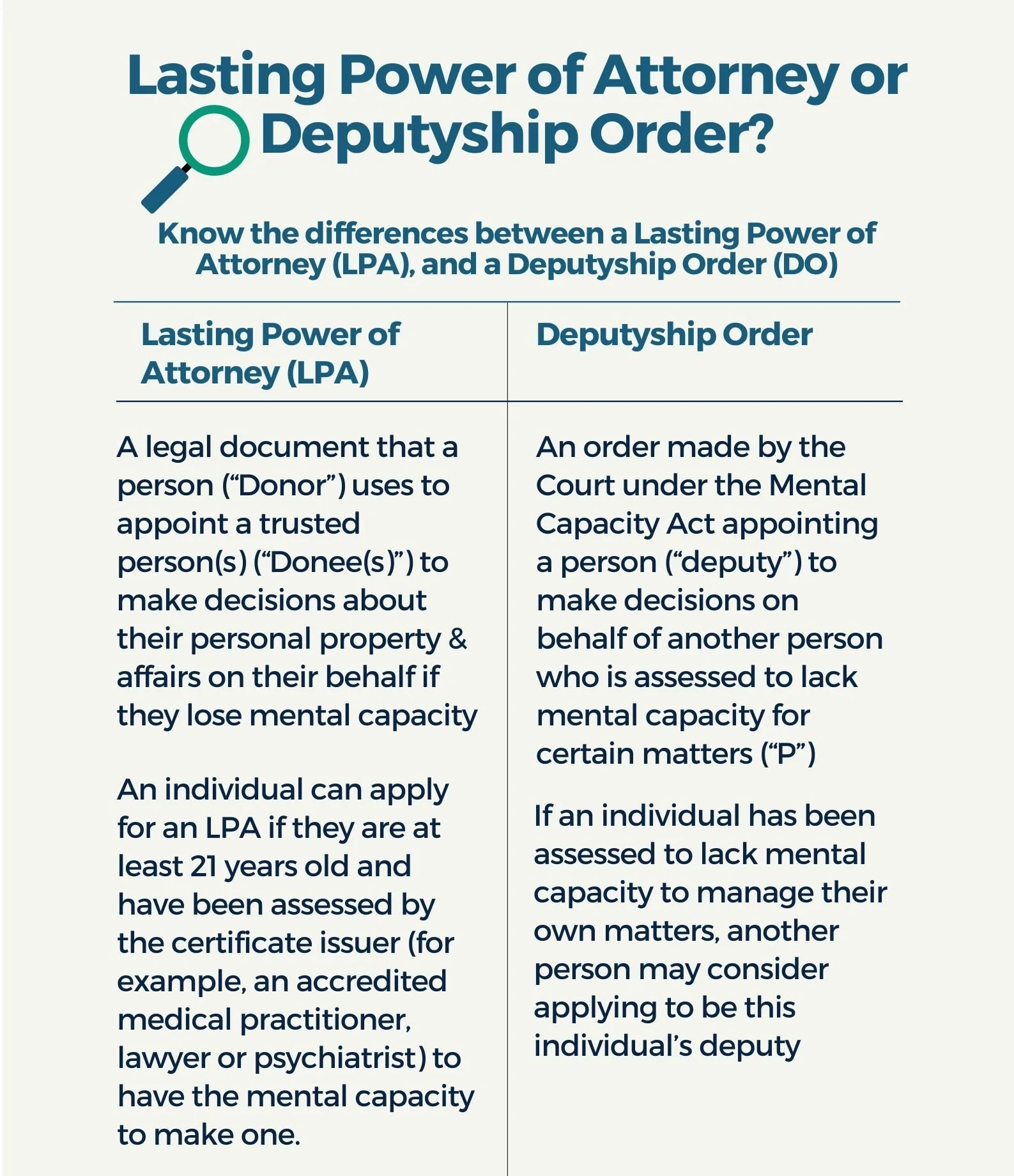
What’s the Difference between LPA & DO?
If there is more than one deputy, decisions can be made
Jointly - if deputies intend to make all decisions together
Jointly and Severally – if deputies intend to make the decision either together or independently
A successor deputy of at least 21 years old can also be appointed.